

Virtual cards for departments
Every team gets its own card. Every project gets its own card. Set the budget. Lock the categories. See who spent what. Stop being the gatekeeper for every purchase.











One shared card. Month-end reconciliation hell.
If you have ever tried to answer 'how much did marketing spend on ads last week,' you know the pattern. The shared card was a shortcut. It is now the bottleneck.
- Finance is the gatekeeper. Every non-routine purchase needs a human approval. The team waits.
- Department heads fly blind. No live view of their own spend. They find out at month-end.
- Reconciliation is a marathon. Categorize every line item by hand. Match charges to departments after the fact.
One card per team. Real-time budgets.
Each department gets its own virtual Visa card with its own monthly budget and category lock. Each project gets a sub-card. Admins can give department heads permission to issue and manage cards within approved limits. Finance sees everything, tagged by department.
- One card per team or project. Marketing has its own card. Engineering has its own. The Q2 launch has its own. No more 'whose charge is that.'
- Project-level budgets. Set a monthly recurring budget per team or a one-time budget per project. Transactions over the set budget can be blocked based on your controls.
- Category controls per team. Engineering equals cloud plus SaaS. Marketing equals ads plus events. Sales equals travel plus hospitality.
- Reporting by tag. Every card is tagged by department and optional project. Spend rolls up in your dashboard and can be exported for your accounting or GL workflow.
- Works alongside other use cases. Same wallet funds contractor payments, business travel, and more.
Four steps to self-serve department spending.
- 01
Set up departments and budgets.
Marketing $40K a month, Engineering $25K, Sales $15K. One row per team.
- 02
Issue department cards.
Each department head gets a card scoped to their budget with the categories they need.
- 03
Spend happens in the open.
With admin-granted permissions, department heads can issue sub-cards for vendors, freelancers, or one-off projects within their approved limits.
- 04
Reports auto-route.
Every transaction is tagged by department. Month-end is a single export, not a reconciliation project.
Your department spend in one dashboard.
Watch every charge land, by department and by project. Issue, freeze, or close any card from the same screen.
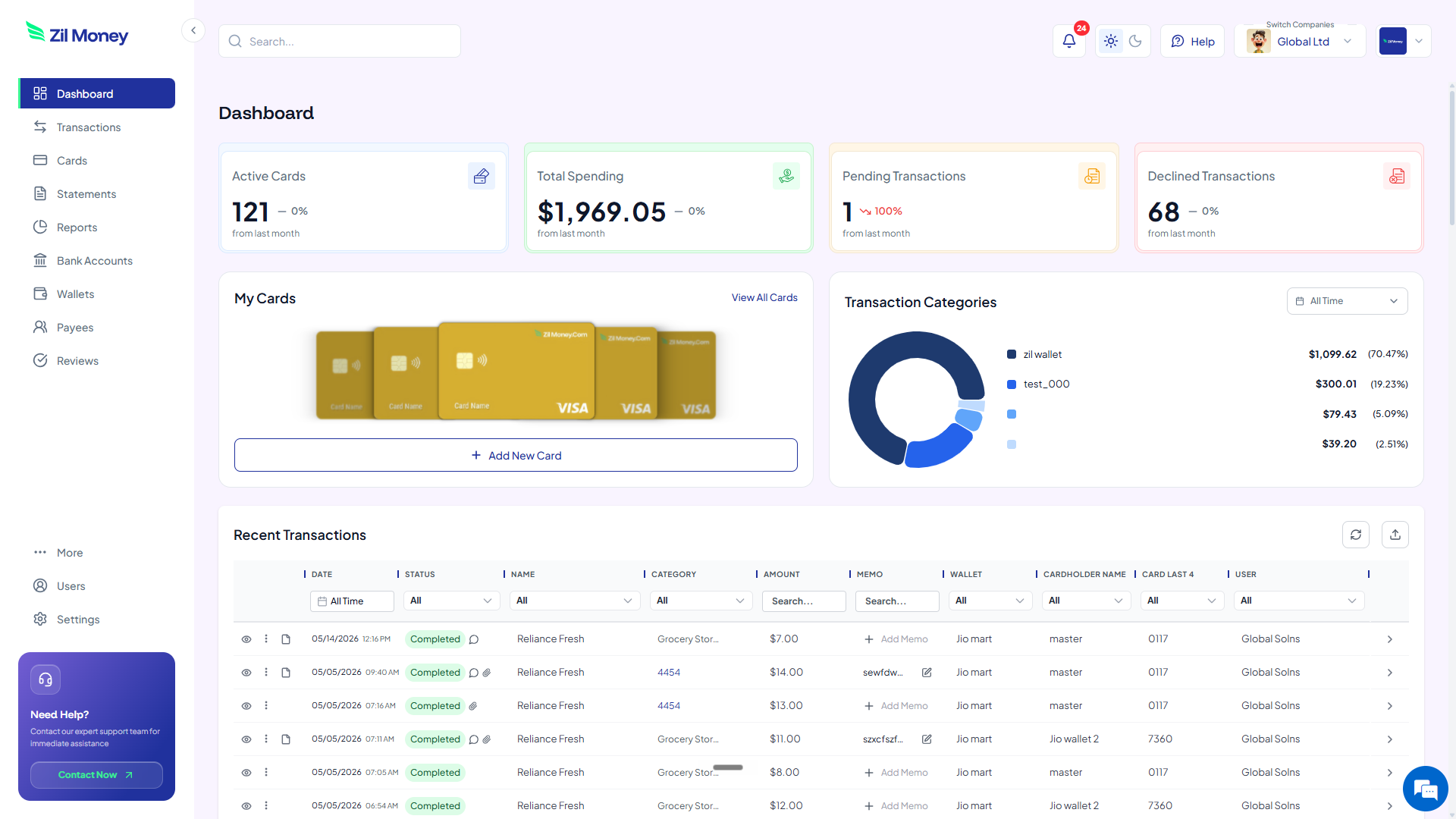
Live dashboard
Active cards by department, total spend by team, declined attempts, every charge as it happens.
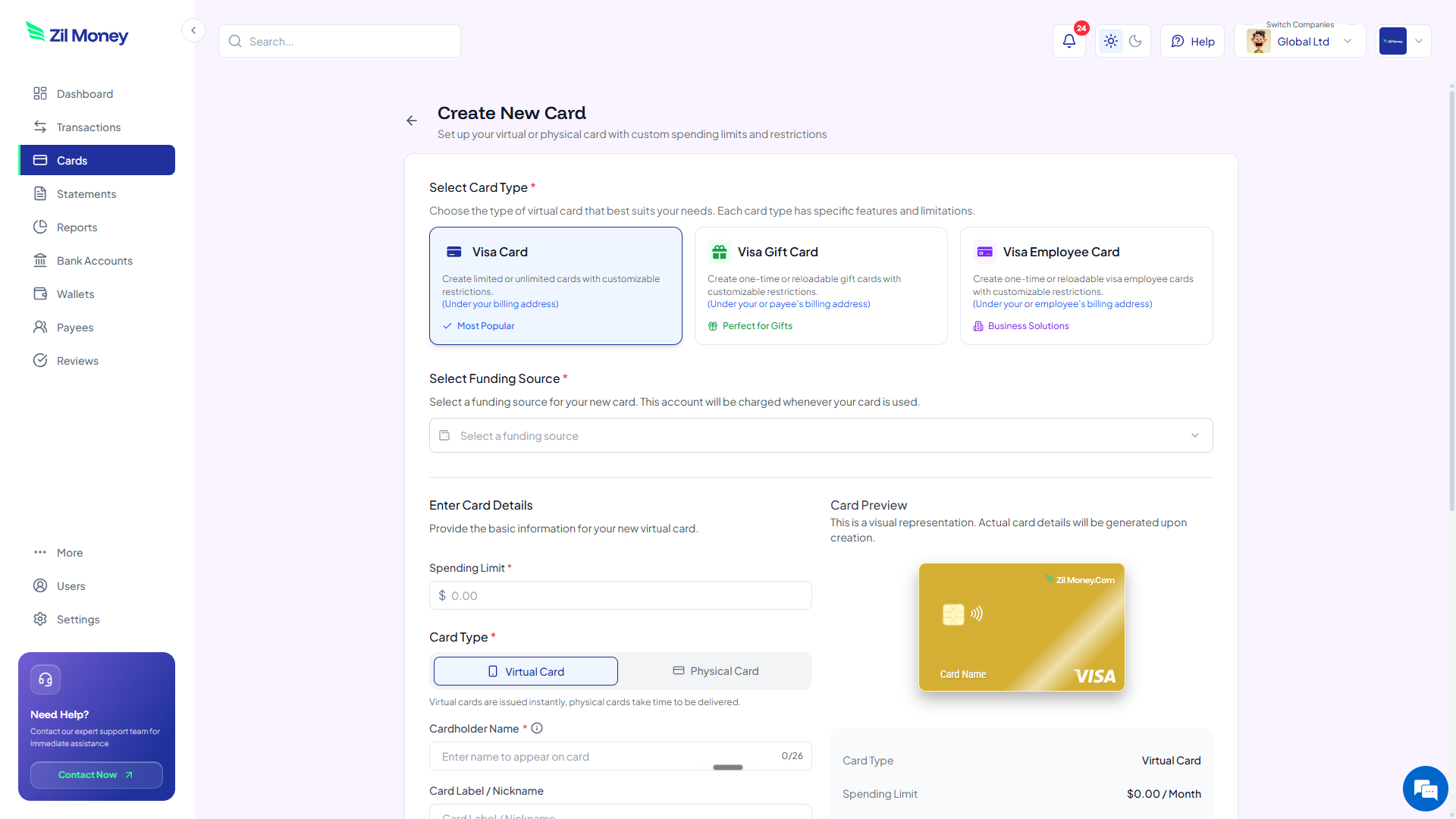
Issue a department card in minutes
Pick the card type, set the monthly budget, lock the categories, hand it to the team lead.
What you can set per department card.
ControlWhat you setWhy it matters
Monthly budget
Recurring or one-timeCaps department spend based on your controls.
Category whitelist
Allowed store typesEngineering cannot charge a restaurant. Sales cannot charge AWS.
Department tag
Team name or codePer-department spend rollup in your dashboard.
Admin permissions
Who can issue sub-cardsDepartment head self-serves without a finance ticket.
Sub-card limit
Cap per sub-cardDepartment head can issue cards up to a per-card ceiling.
Three ways teams run department spend on virtual cards.
- Marketing / Q2 campaign
Marketing has a $40K monthly card. For the Q2 launch, the CMO issues a $15K sub-card locked to ads and event vendors. Campaign ends. Sub-card closes. Leftover returns to the marketing budget.
- Engineering / SaaS
Engineering's $25K card is locked to cloud and SaaS. The VP Eng issues vendor cards for Notion, Linear, AWS, and GitHub. Each one at the contract amount, all from within that budget.
- Sales / travel pool
Sales gets a $15K travel pool card. Each rep gets a sub-card for their trips. Finance sees individual trip spend without issuing a card directly.
Need cards for other kinds of spend? See contractor payments, SaaS subscriptions, or business travel.
Common questions.
Can department heads issue their own cards?
Admins can give department heads permission to issue and manage cards within approved limits, without going through finance for every request.
How do I tie card spend back to a department for reporting?
Every card is assigned a department tag at issuance. Spend rolls up by tag in your dashboard and can be exported for your accounting or GL workflow.
What happens when a department's budget is exhausted?
Transactions over the set budget can be blocked based on your controls. The department head gets a notification and can request a budget increase.
Can I set different category restrictions per department?
Yes. Engineering cards can allow cloud and SaaS spend. Marketing cards can allow ads and event vendors. Sales cards can allow travel and hospitality. You set the rules per card or per department default.
Do budgets refresh automatically each month?
Yes. Monthly recurring budgets reset on the day you choose. Project budgets can be one-time or open-ended.
Related setups.
- Use cases
Virtual cards for property management: one card per property, every repair on record
Repairs, turnovers, and supply runs happen across many properties at once. Here is how to give each property its own budget, give maintenance staff a capped card, and keep every charge tied to the right unit and owner.
7 min read - Use cases
Virtual cards for contractors
Pay your contractors with a virtual Visa card. Set a budget. Restrict to allowed merchant categories. Cancel the card when the job is done. They never see your bank account.
3 min read - Use cases
What a Virtual Card for Small Business Actually Does
Before you hand your team a virtual card for small business, it helps to know what it actually is: a Visa card funded from your own wallet, not a line of credit. Here is what it does, how the spend controls work, and what setting one up looks like.
6 min read
Issue the first one this afternoon.
Departments take about a minute each: pick the type, set the limit, add the restrictions, send it.