









 ChatGPT
 Claude
 Grok
Grok
 Perplexity
 Gemini
Why virtual cards fit remote teams
A distributed team breaks the old way of paying for things. There is no office card to grab, no manager down the hall to approve a purchase, and no mailroom for receipts. The default becomes “pay out of pocket and file an expense report,” which is slow for the worker and messy for finance.
Virtual cards fit a remote team because the card travels to the person, not the place. Each worker gets their own capped card, funded centrally, usable anywhere Visa is accepted. Three habits end the day you switch:
- Out-of-pocket spending. Remote staff stop fronting their own money for work expenses and waiting weeks to be paid back.
- The shared-card workaround. Nobody has to text a photo of the company card to a colleague in another city.
- The mailed expense report. Receipts attach to the charge from anywhere, so there is no envelope to send and no report to chase.
The question is not “who paid for this and how do we pay them back?” It is “what is each person allowed to spend, and is the receipt attached?” A capped card per worker answers both.
What a virtual card actually is
A virtual card is a Visa you issue on demand, with its own number, expiration date, and CVV. You set its spending limit and assign it to a person. For a remote team, that means an employee card per worker, each funded from your wallet.
The worker receives an email with instructions to access and use the card, and it works wherever Visa is accepted, online and through Apple Wallet or Google Wallet where supported. You keep control of the limit and can cancel the card from your dashboard at any time.
If your remote staff travel for work, pair this with the guide to business travel cards without expense reports. If you organize spend by team, see the department budgets guide.
A virtual card is a Visa you assign to a remote worker. Set the limit to their approved budget, restrict where it works based on supported controls, and let them attach receipts to each charge from anywhere. Cancel it from your dashboard when the role or project ends.
How to give remote employees a spending card in four steps
Here is the full workflow. It works for two remote hires or two hundred, and it replaces the reimbursement cycle with approved spend.
-
Decide what each role can spend on.
List the spend a remote role actually needs: software, home-office supplies, a coworking day, client meals. Set a limit per person or per category. Those become the card limits.
-
Issue an employee card per worker.
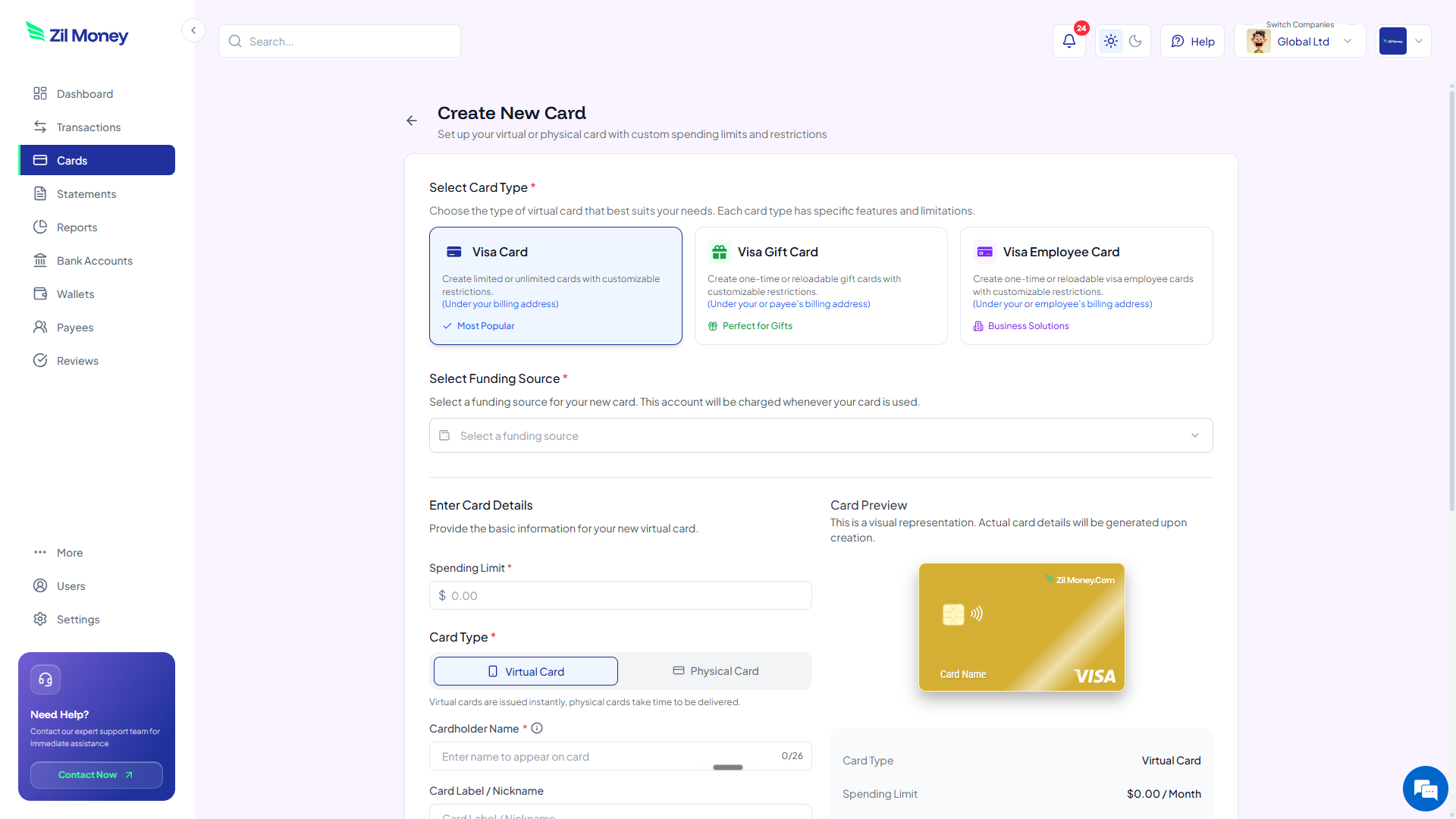
In Virtual Card Maker, create an employee card for each remote team member. Set the limit and label the card by name and purpose, for example “Maria, home office.” The worker gets an email to access it.
-
Set limits and restrict where needed.
Set each spending limit and, where supported, restrict the merchants the card can use. A home-office card stays for office supplies, a software card stays for software.
-
Reconcile from your dashboard.
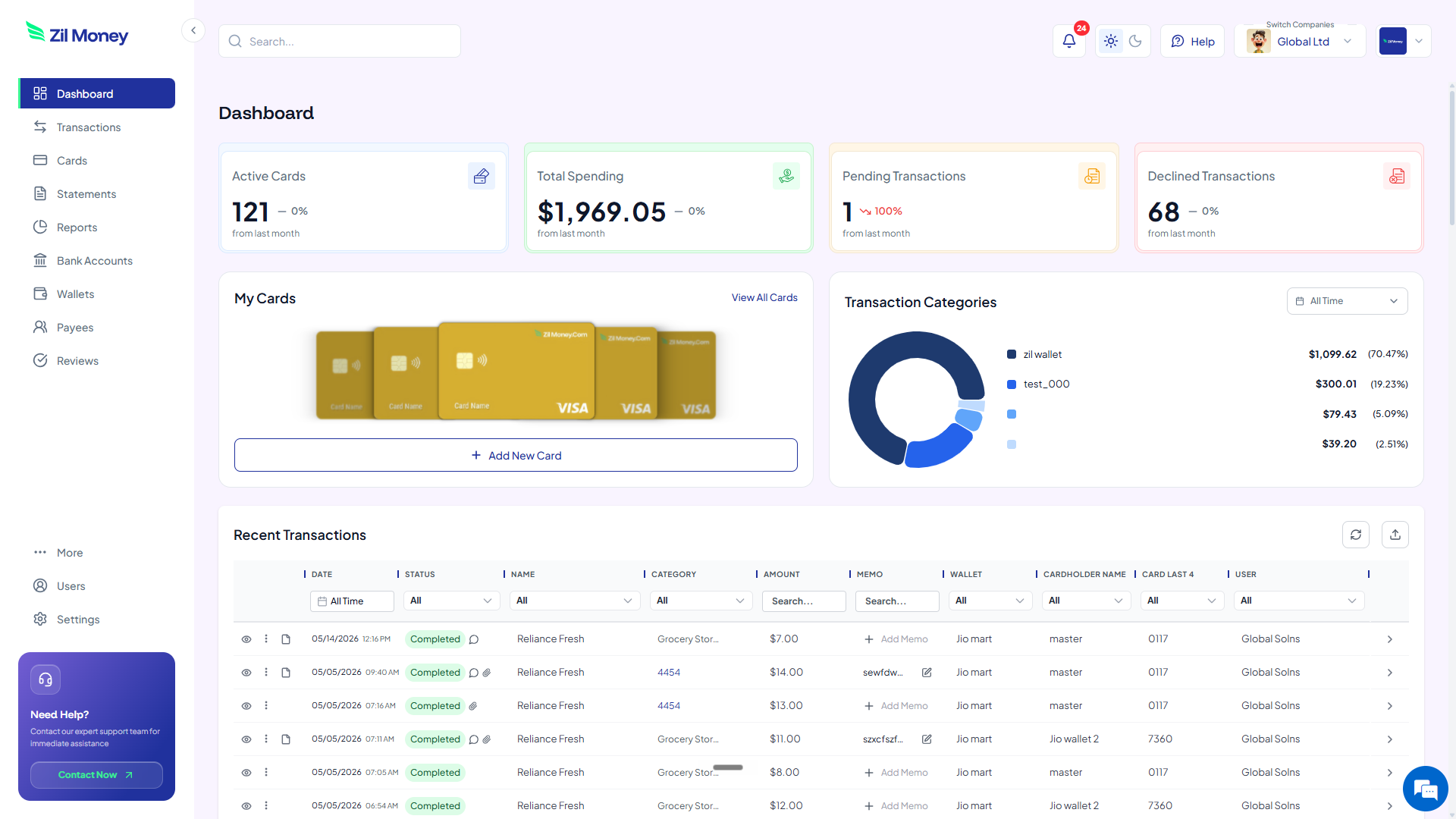
Charges appear with the merchant, amount, and date, and the worker attaches a receipt to each one. You review per-person spend and export for your accounting workflow, with no reimbursement run.
Reimbursing a remote team by spreadsheet?
Give each worker a capped card and trade the reimbursement cycle for approved spend.
Reimbursing remote staff vs giving them a card
The gain is not the card itself. It is that out-of-pocket spending, the shared-card workaround, and the mailed expense report all go away. Here is the side-by-side.
Staff pay first, file later, and wait to be paid back.
- Remote workers front their own money for work expenses.
- Expense reports get filled out, mailed, and chased.
- Finance reconciles weeks after the spend happened.
- Some staff share or borrow a single company card.
- There is no cap, so a purchase can exceed what was approved.
A capped card per worker, with receipts attached as they spend.
- Each worker spends approved money, not their own.
- Receipts attach to each charge from anywhere.
- Spend reconciles in the dashboard as it happens.
- Everyone has their own card, so nothing is shared.
- Each card is capped to the approved amount.
Three remote-team moments where virtual cards pay off
Remote work runs on trust and clear rules. Here are three real moments where a card per worker makes both easier.
The new remote hire setting up a home office
A new hire needs a monitor, a chair, and a headset. Instead of asking them to spend hundreds of their own dollars and wait for reimbursement, you issue an employee card capped at the setup budget. They buy what they need, receipts attach to each charge, and you cancel the card once the setup is done.
The contractor in another city
A remote contractor needs to cover a few project costs. Rather than sharing the company card or routing money through their personal account, they get a capped card for the project. Spend stays inside the limit, and every charge is documented.
The monthly software a team member owns
A remote employee manages a tool the team relies on. You give them a card capped near the subscription amount and restricted where supported, so they can keep the service running without using a shared card or their own.
Remote spend, taxes, and accountable records
How remote spend is taxed depends on how you document it. Under what the IRS calls an accountable plan, where workers prove what they spent and why, business expenses are generally not taxed as wages. Without receipts and a business purpose, that same spend can become taxable income. The IRS covers the rules in Publication 463, and fringe-benefit treatment in Publication 15-B.
A capped card does not replace those records, it makes them easier to keep. Each transaction supports a receipt upload and a reviewer, so the substantiation attaches to the charge as the worker spends. When you reconcile, each employee's spend is already documented and ready to export.
For one-time stipends like a home-office allowance, check how your plan treats them, since some stipends are taxable while substantiated expense reimbursements may not be. Talk to your accountant about which path fits your team.
Why remote teams prefer running spend this way
It sounds like giving everyone a card means losing control. It is the opposite. A reimbursement system has no limit until after the money is spent, while a capped card sets the boundary first and shows every charge in one place.
It also signals trust the right way. New hires are not asked to bankroll the company for a month, and finance is not stuck approving surprises after the fact. People spend within a clear limit, and the records build themselves.
Give your first remote card this afternoon
If you have a remote worker waiting on a reimbursement right now, here is the simplest next step.
- Sign up. Create an account at Virtual Card Maker. You create the card online and fund it from a connected bank account, with no plastic to wait for in the mail.
- Set the budgets. Decide what each remote role can spend on and the limit for each.
- Issue the cards. Create an employee card per worker, set the limit, and label it by name and purpose.
- Restrict where needed. Where supported, restrict each card to the merchants it should use.
- Reconcile from the dashboard. Have workers attach receipts to charges and export for accounting, with no reimbursement run.
That is the whole loop. Begin with your next remote hire's setup budget, then make per-worker cards the norm. Most teams that switch stop running reimbursements entirely.